

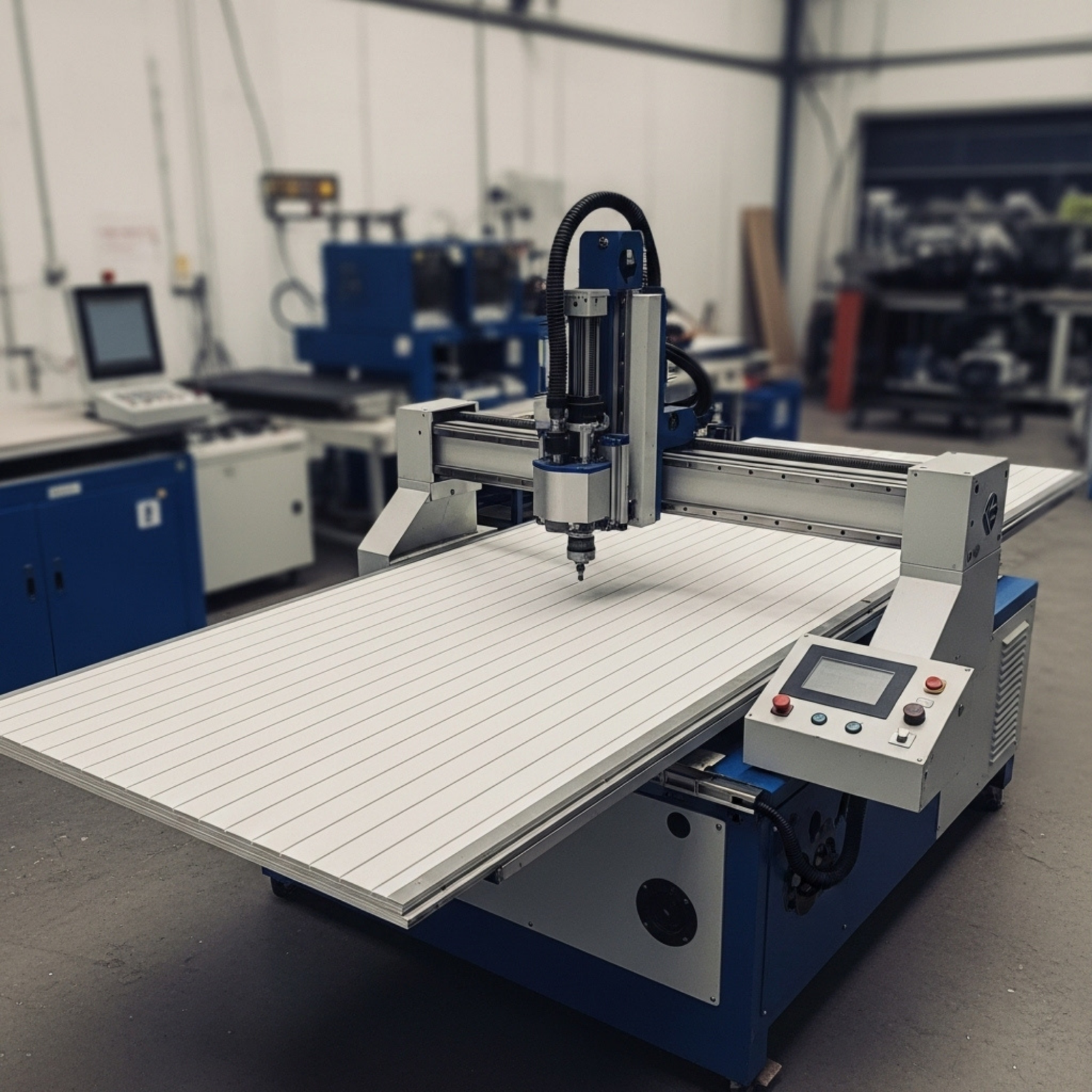
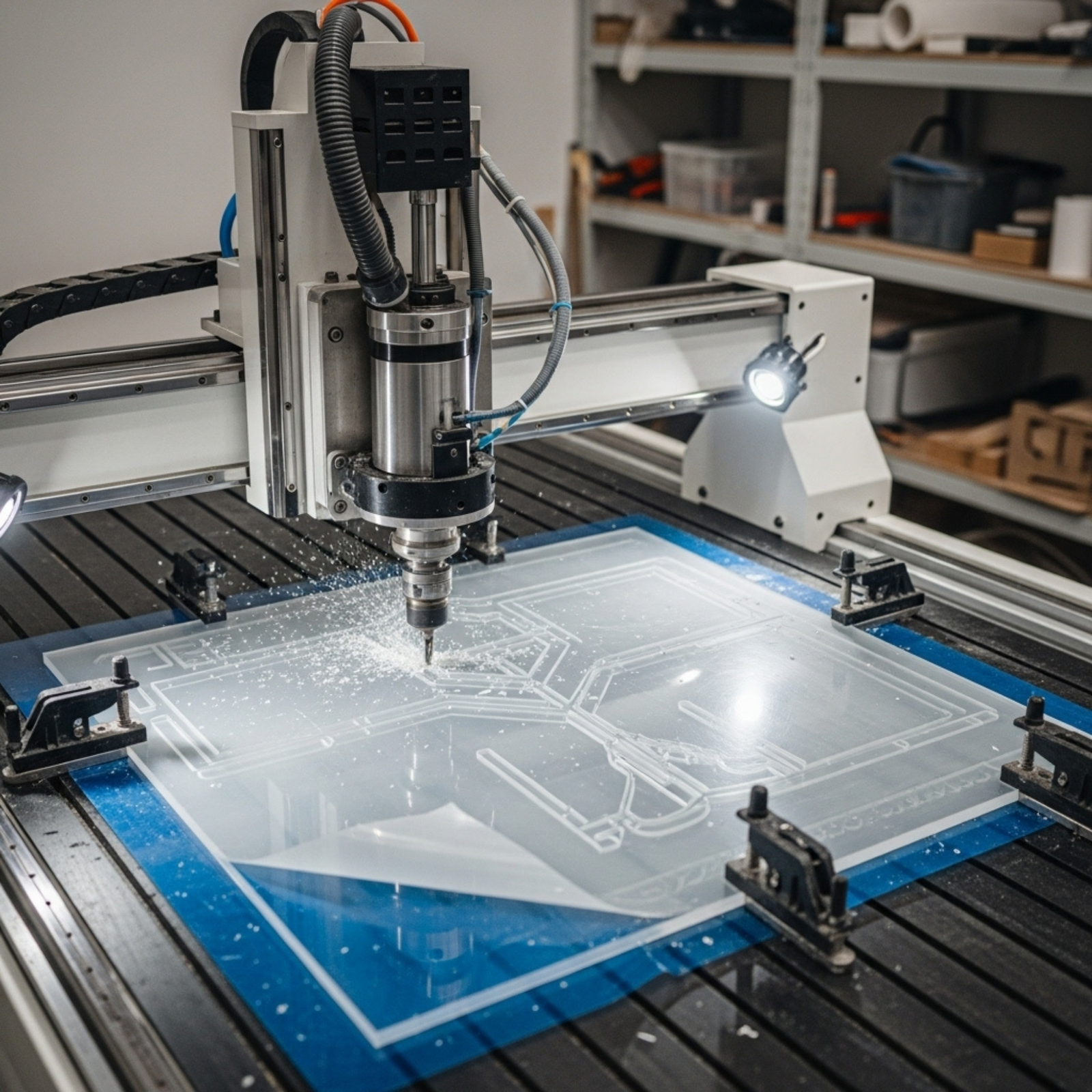

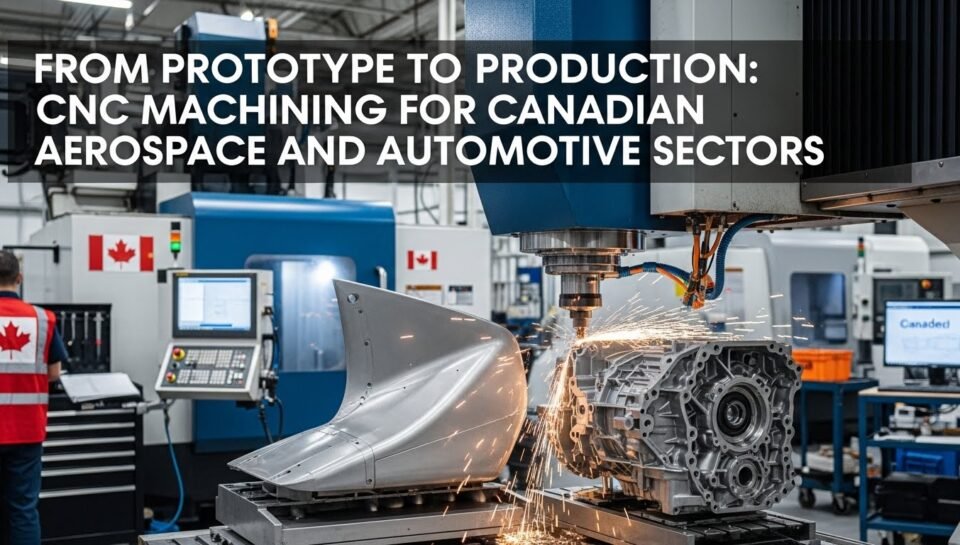
The landscape of Canadian manufacturing is undergoing a profound transformation in 2025. With the automotive sector rapidly pivoting toward Electric Vehicles (EVs) and the aerospace industry pushing the boundaries of fuel efficiency and lightweight materials, the demand for high-precision components has never been higher. At the heart of this industrial evolution lies CNC Machining Canada, the critical process that bridges the gap between a conceptual design and a road-ready or flight-certified component.
For engineers and procurement managers, the journey from a single prototype to full-scale production is fraught with challenges. It requires a strategic partnership with machining experts who understand the rigours of Canadian regulatory standards. This guide explores how advanced manufacturing facilitates this transition for Canada’s two most vital industries.
The Canadian Industrial Landscape in 2025
Canada remains a global powerhouse in advanced manufacturing. According to the Government of Canada, the aerospace sector contributes over $25 billion annually to the GDP, while the automotive sector is the largest manufacturing industry in the country.
However, the requirements are shifting. Automotive manufacturers are no longer just building internal combustion engines; they are requiring complex battery enclosures and motor housings. Similarly, aerospace giants are demanding lighter, stronger alloys to meet net-zero targets. This is where xprocnc.com steps in, offering the technological capabilities required to meet these modern demands.
Phase 1: The Prototype – Validating the Concept
Before a part ever reaches an assembly line in Ontario or a hangar in Quebec, it begins as a prototype. In 2025, speed is the currency of innovation.
Rapid Prototyping with CNC
While 3D printing has its place, functional prototyping for automotive and aerospace applications often requires the actual material intended for the final product. CNC machining allows engineers to test parts made from Aluminum 7075, Titanium (Ti-6Al-4V), or Inconel.
- Fit and Function: Verifying that the part interacts correctly with other assemblies.
- Thermal Testing: Ensuring materials can withstand the extreme temperature fluctuations of high-altitude flight or EV battery heat generation.
- Stress Testing: Subjecting the machined part to real-world physical loads.
Phase 2: Design for Manufacturing (DFM)
The most critical step in moving from “one-off” to “one million” is Design for Manufacturing (DFM). This is an engineering methodology that optimizes a design to make it easier, faster, and cheaper to manufacture without sacrificing quality.
A skilled machining partner will analyze the prototype design and suggest changes, such as:
- Reducing Complexity: Minimizing the number of setups required to machine the part.
- Standardizing Radii: Using standard tool sizes for corners to avoid expensive custom tooling.
- Wall Thickness: Ensuring walls are not so thin that they vibrate (chatter) during machining, which ruins surface finish.
Engaging with experts at xprocnc.com during the DFM phase can save Canadian manufacturers up to 30% in production costs by identifying inefficiencies before mass production begins.
Phase 3: Production – The Power of 5-Axis Machining
Once the design is locked in, production begins. In the context of the aerospace and automotive sectors, this usually involves 5-axis CNC machining.
Unlike traditional 3-axis machines, which move on the X, Y, and Z axes, 5-axis machines can rotate the part or the tool on two additional axes. This capability is indispensable for:
- Aerospace Impellers and Turbines: These require complex curved geometries that 3-axis machines simply cannot produce.
- Automotive Engine Blocks: machining complex angles in a single setup reduces error and increases throughput.
Material Mastery: What Runs Canada?
The choice of material dictates the machining strategy.
Aerospace Materials
- Titanium: Prized for its strength-to-weight ratio but notorious for destroying tools. It requires low cutting speeds and high coolant pressure.
- Inconel: A nickel-chromium superalloy used in jet engines due to its resistance to extreme heat.
Automotive Materials
- Aluminum 6061 & 7075: The standard for structural components and EV battery frames due to being lightweight.
- Stainless Steel: Used for exhaust systems and structural reinforcements.
Quality Assurance and Certifications
In these sectors, there is no margin for error. A failure in a landing gear component or a brake caliper is catastrophic. Therefore, choosing a CNC Machining Canada partner with the right certifications is non-negotiable.
- AS9100: The gold standard for the aerospace industry. It builds upon ISO 9001 but includes additional requirements for quality and safety specific to aerospace.
- IATF 16949: The global technical specification and quality management standard for the automotive industry.
Reputable manufacturers utilize Coordinate Measuring Machines (CMM) to verify that every micron of the produced part matches the CAD model. You can learn more about these standards through the Aerospace Industries Association of Canada (AIAC).
The Importance of a Local Supply Chain
The global disruptions of the early 2020s taught Canadian manufacturers a hard lesson: reliance on overseas production is risky. By 2025, “near-shoring” has become a strategic priority.
Partnering with local machining services like xprocnc.com offers distinct advantages:
- Reduced Shipping Costs & Tariffs: Eliminating cross-ocean freight.
- Time Zone Alignment: Real-time communication between design engineers and machinists.
- Intellectual Property Protection: Canada has some of the strictest IP laws in the world, ensuring your proprietary designs remain secure.
Conclusion
The transition from a prototype to full-scale production is a journey of refinement, precision, and partnership. For Canada’s aerospace and automotive sectors, the ability to produce complex, high-tolerance parts efficiently is the key to maintaining global competitiveness in 2025.
Whether you are engineering the next generation of zero-emission vehicles or contributing to the global space supply chain, success depends on the quality of your manufacturing partners. By focusing on DFM, leveraging 5-axis technology, and adhering to strict quality standards, Canadian companies can continue to lead the world in industrial innovation.
Disclaimer
The information provided in this article is for general informational and educational purposes only. While we strive to ensure the accuracy of the content, manufacturing standards, regulations, and technologies are subject to change. This content should not be considered as professional engineering advice. We recommend consulting with qualified engineers and industry experts before applying any of the techniques or information mentioned in your specific production processes.